Project at a Glance
Project Ref GTR2105MtVernon · Verified 09/2026- Building Type
- Occupied multi-family apartment building
- Location
- 2105 Mt Vernon Ave, Alexandria, VA 22301
- Roof Area
- 3,822 SF
- Residential Units Below
- 12 units
- Existing System
- Modified bitumen, 25 years old
- Deck Type
- Wood
- Installed System
- Fluid-applied high-solids silicone restoration
- Manufacturer
- Progressive Materials
- Field Coating
- PM Pro-Eco Sil HS 3200 Series
- Coating Color
- White (HS 3201 / LS 2201)
- Dry Film Thickness
- 40 mils minimum DFT
- Seam Treatment
- 20 mil silicone stripe, approx. 2 in. wide, all laps
- Reinforced Repairs
- 3-course silicone and polyester at failed seams and flashings
- Slope Correction
- PM Pro Slope at ponding and low areas
- HVAC Units Lifted
- 8 large units jacked to coat beneath
- Surface Preparation
- Power wash at minimum 2,000 PSI
- Bleed-Block Primer
- PM P-160, entire surface at 1 gal/100 SF
- Diagnostics
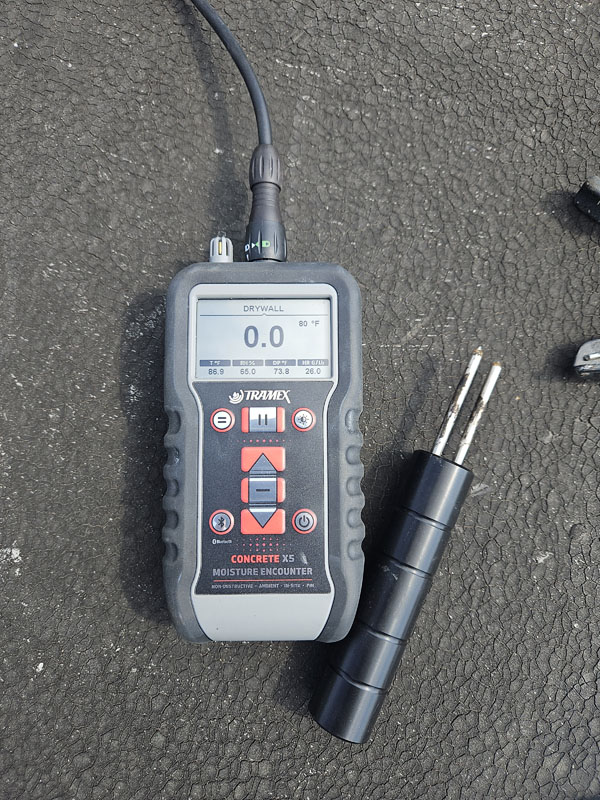
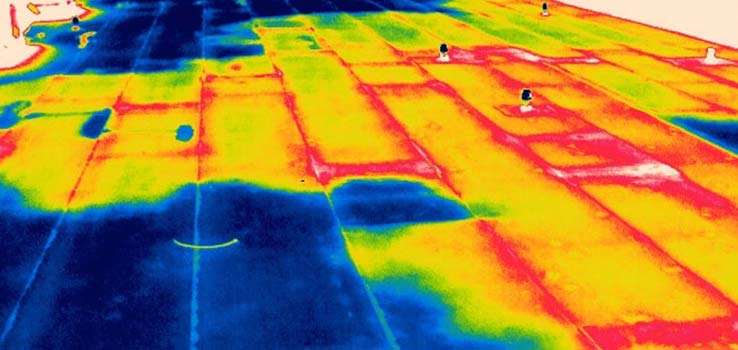
- Tramex surface scan and CMEX5 pin probe; HIKMICRO M30 post-sunset infrared scan
- Warranty Issued
- 20-year Progressive Materials labor & material
- Start Date
- 07/2025
- Completion Date
- 08/2025
- Duration
- 10 working days
- Building Occupancy
- Fully occupied throughout; no tear-off
- Recordable Incidents
- 0
Executive Summary
What This Project Involved
The existing roof at this Alexandria apartment building was a 3,822-square-foot modified bitumen assembly over occupied residential units. The membrane itself was still serviceable as a substrate, but it had weathered to the point where the laps had become the weak line across the whole roof, flashings at the rooftop equipment had opened up, and several low areas held water long after rainfall because the roof had never drained properly to begin with. The owner's objective was to stop the leaks and secure a long-term warranty without moving residents out or opening the roof over their apartments.
Restoration was the right fit for that objective, but only after it was proved out. A moisture survey was performed across the roof before any scope was committed, so that any saturated insulation could be found and cut out rather than sealed in beneath a new coating. The roof was then power washed at a minimum of 2,000 PSI and allowed to dry, and an adhesion test was run on the cleaned surface to confirm the silicone would bond to this particular aged modified bitumen. Progressive Materials P-160 Asphalt Bleed-Block Primer was then spray-applied over the entire modified bitumen surface at one gallon per 100 square feet, as the system requires. P-160 is a single-component, water-based, plasticizer-free acrylic primer that forms a barrier between the asphalt and the silicone, preventing the chemicals that bleed out of an asphalt roof from yellowing the white coating above it.
The roof was then repaired before it was coated. Every membrane lap seam across the roof received a 20-mil silicone seam stripe approximately two inches wide, applied at roughly 400 linear feet per gallon, before any field coating went down. Failed and open seams and flashing failures were rebuilt with three-course repairs — silicone, polyester reinforcing fabric, and silicone over the top. Ponding and low areas were re-sloped with PM Pro Slope, and alligatored and heavily cracked areas were filled and smoothed with PM SL 800 Surface Leveler. Eight large HVAC units were jacked up and supported clear of the deck so the roof underneath them could be washed, detailed, and coated to the same specification as the open field rather than left as an uncoated gap in the middle of a warranted system.
PM Pro-Eco Silicone HS 3200 Series high-solids silicone was then applied across the full roof in white to a minimum of 40 mils dry film thickness, the thickness the 20-year system requires. Progressive Materials inspected the completed roof, and a 20-year labor and material warranty covering leaks due to silicone material failure was issued to the owner. The work was completed in 10 working days across July and August 2025 with the building fully occupied throughout and no tear-off at any stage.
Starting Point
Existing Conditions
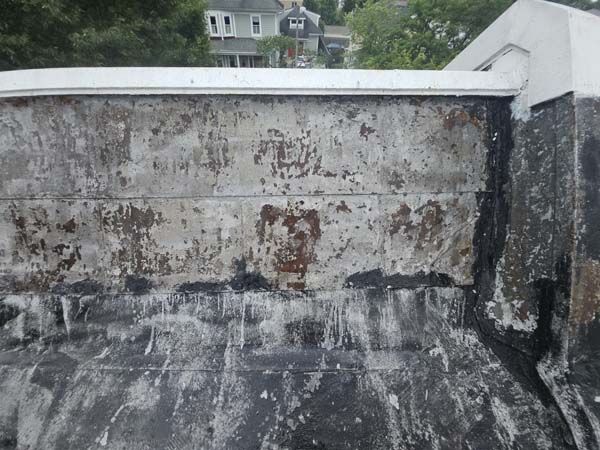
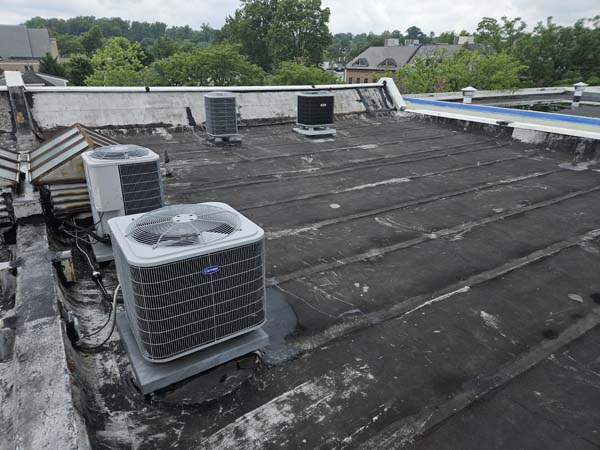
The modified bitumen membrane was aged but structurally intact, which is what made it a restoration candidate rather than a replacement. The deficiencies were concentrated where they usually are on an aged mod-bit roof: at the laps, at the flashings and rooftop equipment, and in the low areas where the original roof had never been sloped to drain. Conditions were recorded by component so the repair scope could be priced against documented extent rather than an allowance.
| Location | Observed condition | Extent | Leak history |
|---|---|---|---|
| Membrane field | Aged modified bitumen with surface weathering, granule loss, and areas of alligatoring and surface cracking | 3,822 SF | Reported leaks into units below |
| Membrane lap seams | Weathered laps with open and lifted edges at side and end joints | 1,275 LF of lap seams | Primary reported entry point |
| Failed and open seams | Seams separated or split through, requiring reinforced repair rather than coating alone | 487 LF | Active leakage |
| Flashings | Failed base flashing and open terminations at walls, curbs, and penetrations | 17 locations | Reported at multiple locations |
| Rooftop HVAC equipment | Large units set close to the roof surface, leaving the membrane beneath them inaccessible, uninspected, and unable to be cleaned or coated in place | 8 units | Suspected at unit locations |
| Drainage | Ponding held past 48 hours in low areas where the existing roof lacked positive slope to the outlets | 5 ponding areas | — |
| Alligatored areas | Heavily cracked and alligatored asphalt surface requiring leveling before coating | 650 SF | — |
| Roof insulation | Retained moisture within the assembly, mapped by survey prior to restoration | 475 SF wet, cut out and replaced | Associated with long-term leakage |
| Penetrations | Aged sealant and failed detailing at pipe, vent, and conduit penetrations | 8 penetrations | Reported at multiple penetrations |
How We Know
Investigation & Diagnostics
A silicone restoration is only valid if three things are established first: that the assembly beneath the membrane is dry, that the coating will bond to this specific weathered surface, and that the drainage defects will be corrected rather than coated over. Each of those was tested rather than assumed, and the moisture survey and the post-cleaning adhesion test are both mandatory steps under the Progressive Materials warranted system, not optional extras.
| Method | Instrument / reference | Finding |
|---|---|---|
| Visual condition survey | Walk-over survey, NRCA inspection practice | Documented weathering of the modified bitumen surface, open and lifted laps, failed flashings, alligatored areas, and low areas holding water; the membrane was confirmed to be sound enough as a substrate to carry a restoration |
| Moisture survey — surface scan | Tramex surface scan moisture meter, non-destructive, required by the manufacturer before restoration | Swept the full roof area to map retained moisture within the existing assembly so wet material could be cut out and replaced instead of being sealed beneath the new coating |
| Moisture survey — pin probe | Tramex CMEX5 digital moisture meter with 2-pin probe, taken in 8 separate areas of the roof | Provided direct penetrating readings to corroborate the surface scan and confirm the extent of moisture at the areas it flagged |
| Infrared thermographic scan | HIKMICRO M30 Professional thermal imager, post-sunset scan | Located subsurface moisture by thermal signature as the roof released heat after sunset, independently confirming the areas identified by the moisture meters |
| Core sampling | Full-depth cores cut at flagged areas and patched the same day | Confirmed the existing assembly and verified the extent of the areas identified by the moisture survey and the thermographic scan |
| Adhesion test | Manufacturer-required adhesion test on the cleaned and dried surface | Pass silicone bond to the washed modified bitumen surface confirmed before the field coating was committed |
| Bleed / yellowing control | PM P-160 Asphalt Bleed-Block Primer requirement for asphalt roof surfaces | P-160 confirmed as required over the entire modified bitumen surface at 1 gallon per 100 SF, forming a barrier between the asphalt and the silicone so that chemicals bleeding out of the asphalt cannot yellow the white coating |
| Drainage survey | Post-rainfall observation at 48 hours | 5 ponding and low areas identified for correction with PM Pro Slope |
| Seam and flashing survey | Lap-by-lap inspection and probe of seam edges and flashing terminations | Separated the laps that required only a standard seam stripe from the failed and open seams and flashing failures that required reinforced three-course repair |
| Rooftop equipment review | Inspection of clearances beneath rooftop HVAC units | 8 large units confirmed as requiring lifting so the membrane beneath could be cleaned, repaired, and coated within the warranted system |
Decision Record
Options Evaluated
Continued repair, silicone restoration, single-ply recover, and full tear-off replacement were evaluated against the documented membrane condition, the moisture survey results, the disruption each would impose on an occupied residential building, and the warranty available at the end of it. The deciding factors were that the existing membrane was still sound as a substrate and the assembly beneath it was dry once the wet areas were replaced, which meant the roof could be repaired and waterproofed without ever being opened over occupied apartments.
| Option | Est. added service life | Tear-off | Disruption to occupants | Warranty available | Outcome |
|---|---|---|---|---|---|
| Continued spot repair | 1–3 years | None | Recurring leaks into occupied units | Workmanship only | Not selected |
| Silicone restoration | 20 years, renewable at term | None; localized wet-area replacement only | Minimal; roof never opened over apartments | 20-year PM labor & material | Selected |
| Single-ply recover | 15–20 years | None, but adds assembly weight and leaves slope defects | Moderate | Manufacturer, subject to survey | Not selected |
| Full tear-off replacement | 20–25 years | Full | High; open roof above occupied apartments | Single-ply manufacturer NDL | Not selected |
Restoration was selected because the conditions that justify it were present and documented: a modified bitumen membrane still sound enough to serve as the base of a new system, a moisture survey that identified a limited and replaceable amount of wet material rather than widespread saturation, and a confirmed adhesion result on the cleaned surface. It delivered the same 20-year warranted outcome as a replacement without tearing off a roof over occupied apartments, without sending the existing roof to landfill, and without the ponding being carried forward — the low areas were re-sloped as part of the work.
What Was Installed
Specified System
The roof was installed to the Progressive Materials Modified Bitumen 20-Year System specification. The 20-year term is not a function of the coating alone: it requires the prescribed surface preparation and testing, the prescribed repair details at every seam and flashing, a minimum 40 mils dry film thickness in the field, white coating only, and a manufacturer inspection of the completed roof before the warranty is issued. The table below is the specification as installed and as submitted for that inspection. Our full silicone restoration process is described on our roof coatings page.
| Component | Product / installed work | Specification | Purpose / result |
|---|---|---|---|
| Moisture survey | Non-destructive moisture survey of the full roof area | Required before restoration | Located retained moisture so it could be removed rather than sealed beneath the coating |
| Wet insulation replacement | Saturated areas cut out and replaced | 475 SF replaced to match existing R-value | Removed the trapped moisture that would otherwise have blistered or disbonded the new system |
| Cleaning | Power wash of the full roof area | Minimum 2,000 PSI, rinsed and dried | Removed contamination and weathered surface material so the silicone could bond |
| Adhesion test | Manufacturer-required adhesion test | Performed after cleaning and drying | Confirmed bond to this specific aged modified bitumen surface before full application |
| Bleed-block primer | PM P-160 Asphalt Bleed-Block Primer — single-component, water-based, plasticizer-free acrylic | 1 gallon per 100 SF, spray applied over the entire modified bitumen surface | Formed a barrier between the asphalt surface and the silicone, preventing chemicals bleeding out of the asphalt from yellowing the white coating |
| Surface leveling | PM SL 800 Surface Leveler | Applied at alligatored and heavily cracked areas as required | Filled and smoothed cracked asphalt so the coating had a sound, continuous surface to bond to |
| Slope correction | PM Pro Slope | Installed at ponding and low areas as required | Re-established positive drainage instead of carrying the ponding forward into the new system |
| Seam stripe — all lap seams | Silicone seam stripe over every membrane lap seam | 20 mils, approx. 2 in. wide, approx. 400 LF per gallon, applied before field coating | Built additional thickness over the most vulnerable line on the roof ahead of the field coat |
| Failed and open seams | 3-course repair: silicone, polyester fabric, silicone | Reinforced repair at every failed or open seam | Restored tensile strength and bridging capability where the membrane had already split |
| Flashing failures | 3-course repair: silicone, polyester fabric, silicone | Same reinforced detail at all flashing failures | Rebuilt the wall, curb, and penetration transitions as part of the warranted system |
| Rooftop HVAC units | 8 large units jacked and supported clear of the roof surface | Roof beneath washed, repaired, striped, and coated to full specification before units were reset | Eliminated uncoated gaps beneath equipment within an otherwise warranted roof |
| Field coating | PM Pro-Eco Silicone HS 3200 Series high-solids silicone | 40 mils minimum dry film thickness across the full 3,822 SF | Seamless fluid-applied waterproofing layer over the restored substrate |
| Coating color | White — HS 3201 / LS 2201 | White only for the 20-year system | Required color for the 20-year term; also delivers the reflectivity benefit of a cool roof |
| Final inspection | Progressive Materials manufacturer inspection | Required for the warranted system | Manufacturer verification of the completed roof before the warranty was issued |
| Warranty | Progressive Materials 20-year warranty | 20-year labor and material, covering leaks due to silicone material failure | Manufacturer-backed long-term coverage for the restored roof |
How It Was Delivered
Execution
The project was completed over 10 working days across July and August 2025 with the apartment building fully occupied. Because a restoration never opens the existing membrane, there was no point in the sequence at which the interior was exposed to weather and no tear-off debris to move through the property.
-
Moisture survey and scope development
The roof was surveyed and a non-destructive moisture survey was performed across the full area before any scope was priced, as the Progressive Materials system requires. The survey was run with a Tramex surface scan moisture meter across the roof field, backed up by a Tramex CMEX5 digital moisture meter using a 2-pin probe taken in eight separate areas of the roof. A post-sunset infrared thermographic scan with a HIKMICRO M30 Professional thermal imager was performed as a third, independent check, reading the areas of retained moisture by the heat they held after sunset. Cores were cut at the flagged areas and patched the same day to confirm the assembly and the extent of wet material. Laps and flashings were inspected individually so that the seams needing only a standard stripe could be separated from the failed and open seams needing reinforced repair, and the low areas holding water were mapped for slope correction.
-
Notification, staging, and access
Residents were notified in advance of work above their units and of any temporary interruption to rooftop equipment. Staging, material hoisting, and ground protection were positioned clear of resident entrances and parking, and daily work was scheduled within normal daytime hours. Because there was no tear-off, no section of roof had to be opened and dried in within a shift, which is what usually drives the disruption on an occupied residential building.
-
Wet area replacement and slope correction
The saturated areas identified by the moisture survey were cut out to the deck and replaced before any coating work began, so nothing wet was sealed in beneath the new system. Low areas that had been holding water past 48 hours were built back up with PM Pro Slope and feathered out into the surrounding field to carry water to the outlets, and alligatored and heavily cracked areas were filled and smoothed with PM SL 800 Surface Leveler to give the silicone a sound, continuous surface.
-
Power washing and adhesion testing
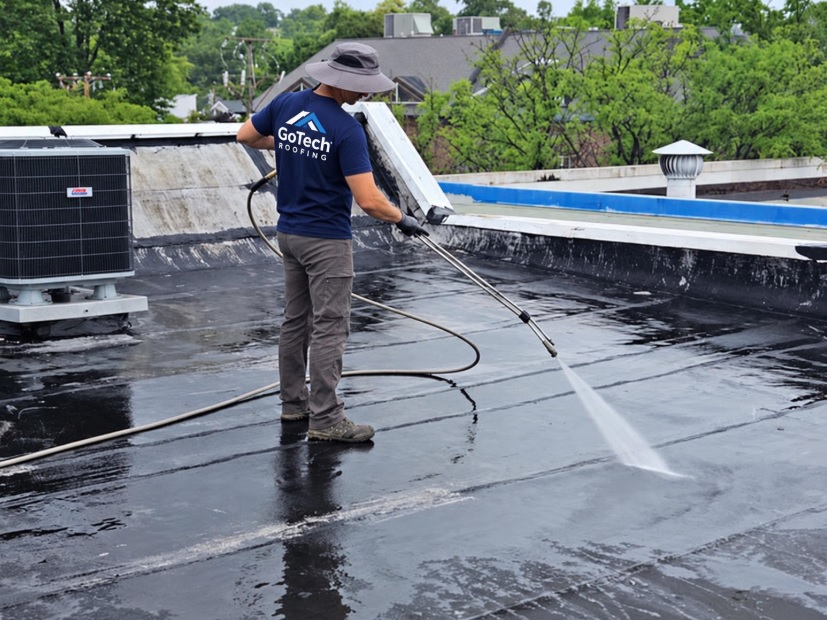
The full roof area was power washed at a minimum of 2,000 PSI to remove contamination and weathered surface material, then rinsed and allowed to dry completely. With the surface clean and dry, the manufacturer-required adhesion test was performed to confirm the silicone would bond to this specific aged modified bitumen before the field coating was committed. PM P-160 Asphalt Bleed-Block Primer was then spray applied over the entire 3,822 square feet at one gallon per 100 square feet. P-160 is a single-component, water-based, plasticizer-free acrylic primer formulated for smooth asphalt roof surfaces; it forms a barrier between the asphalt and the silicone so the chemicals that bleed out of an asphalt roof cannot migrate up and yellow the white coating. It goes down across the whole roof rather than as a spot treatment.
-
Seam striping and three-course repairs
Every membrane lap seam across the roof received a 20-mil silicone seam stripe approximately two inches wide, applied at roughly 400 linear feet per gallon, before any field coating was applied. Laps are where a modified bitumen roof moves and where water gets in first, so they were built up ahead of the field rather than being left at field thickness. Failed and open seams and every flashing failure were rebuilt with a three-course reinforced repair — a base layer of silicone, polyester reinforcing fabric embedded into it while wet, and a second layer of silicone encapsulating the fabric. Curbs, walls, and penetrations were detailed the same way.
-
Lifting eight HVAC units to coat beneath them
Eight large HVAC units sat close enough to the roof surface that the membrane beneath them could not be washed, repaired, or coated in place. Each unit was disconnected as required, jacked up, and supported clear of the deck so the roof underneath could be power washed, detailed, seam striped, and coated to the same specification as the open field before the unit was set back down. Those areas are typically the oldest and least maintained part of any roof, and leaving them uncoated would have left an unwarranted gap in the middle of a warranted system.
-
High-solids silicone applied to 40 mils DFT
PM Pro-Eco Sil HS 3200 Series high-solids silicone was applied in white across the full 3,822 square feet to a minimum of 40 mils dry film thickness, the thickness the 20-year system requires. Coverage was worked section by section with film thickness monitored as the work proceeded, so the specified thickness could be evidenced across the whole roof rather than averaged over it. The finished surface is seamless and highly reflective.
-
Manufacturer inspection and warranty issue
Progressive Materials inspected the completed roof, which is a condition of the warranted system rather than a formality. The thickness record and photographic documentation were submitted with the inspection, and a 20-year labor and material warranty covering leaks due to silicone material failure was issued to the owner.
Measured Outcome
Results
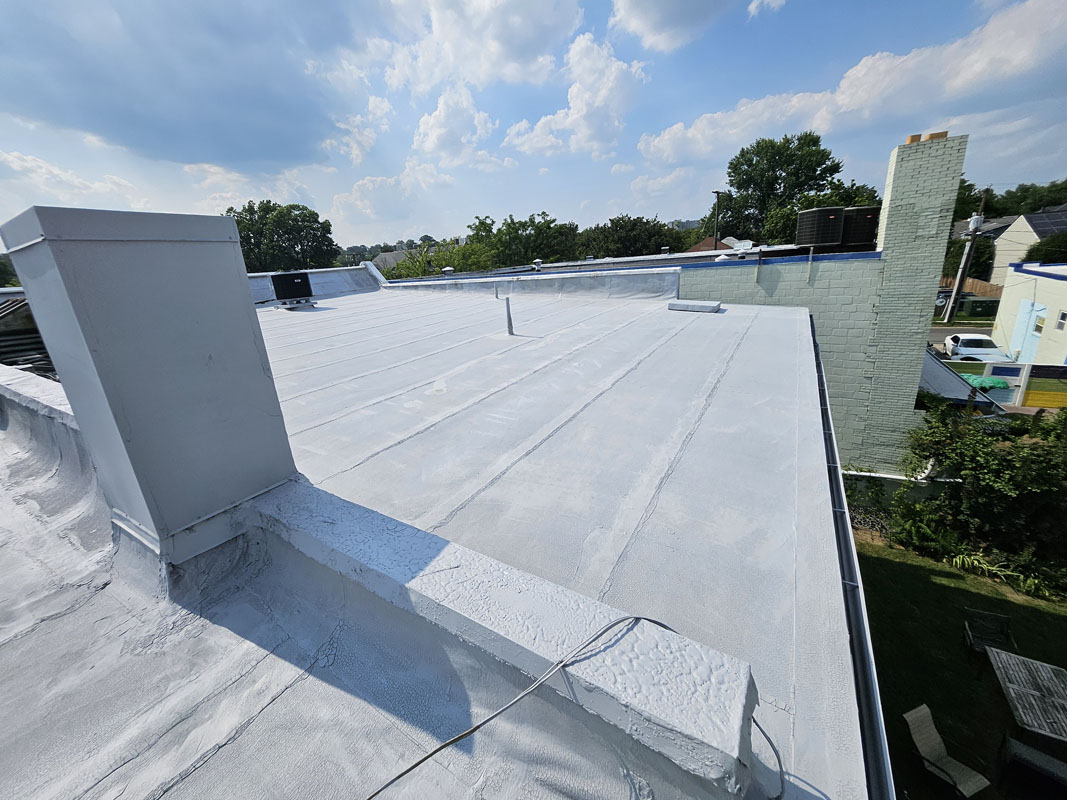
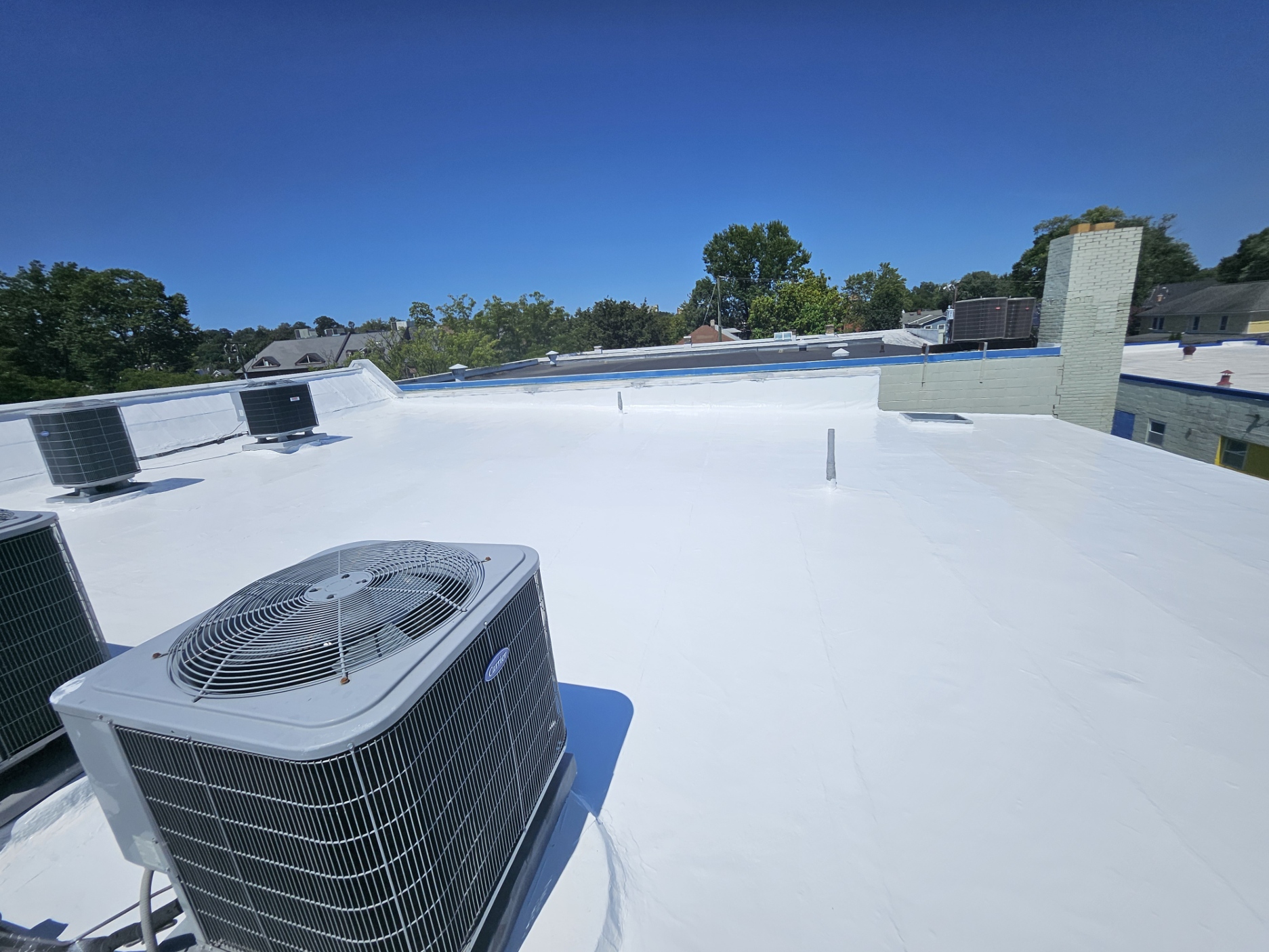
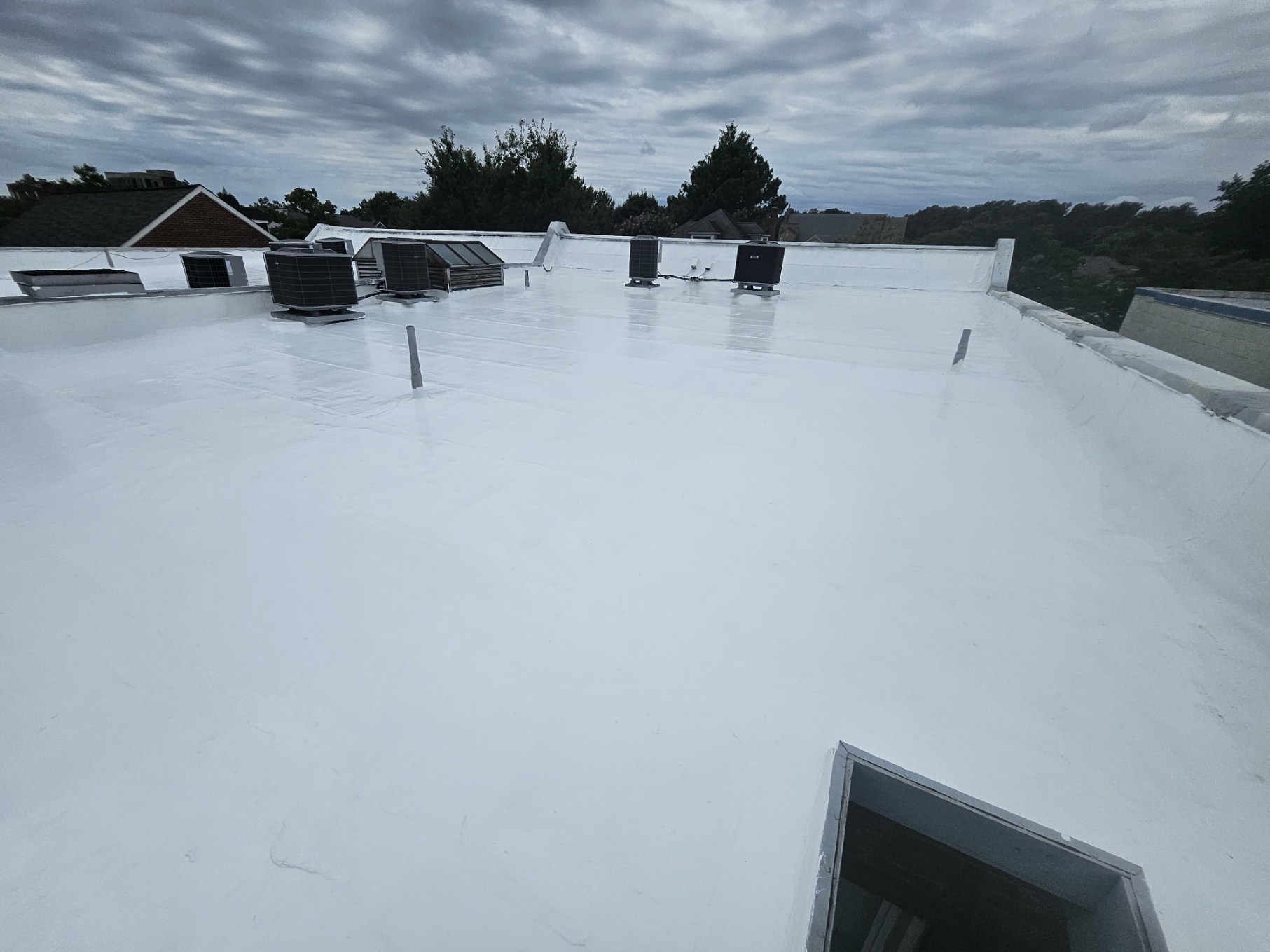
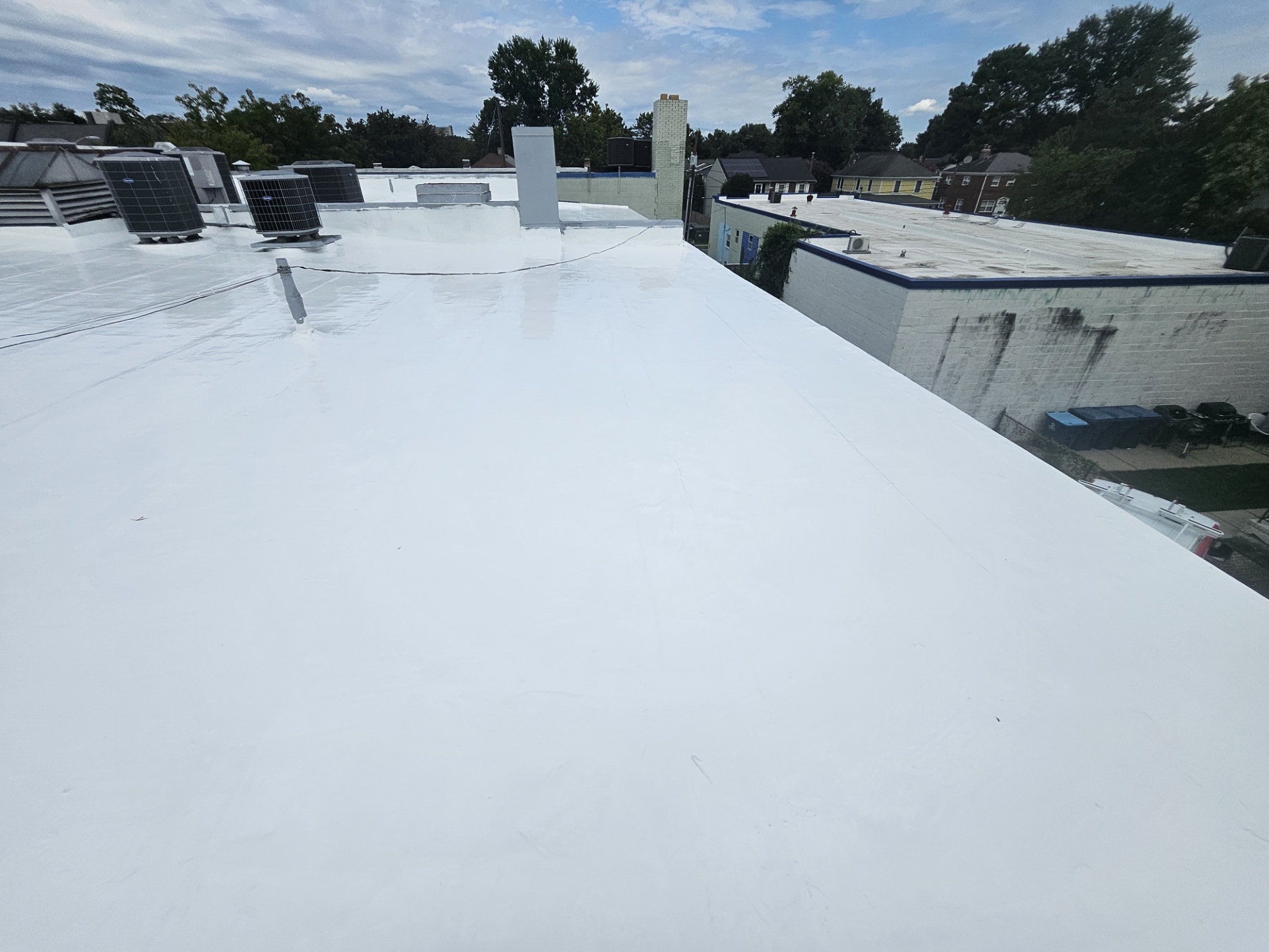
The building has a seamless, white, fully warranted roof over apartments that were never exposed and residents who were never displaced. The existing roof stayed on the building rather than going to landfill, the drainage defects were corrected instead of being coated over, and the areas beneath the rooftop equipment are inside the warranted system rather than outside it. At the end of the 20-year term the system is renewable with a recoat rather than a tear-off.
Verification & Documentation
The project record documents the pre-restoration testing that established the roof was a valid restoration candidate, the repair work performed before coating, the coating thickness achieved, and the manufacturer inspection and warranty closeout. Records are retained and available to the owner on request.
- Moisture survey — non-destructive survey completed across the full roof area before restoration, as required by the manufacturer, using a Tramex surface scan moisture meter and a Tramex CMEX5 digital moisture meter with 2-pin probe read in 8 separate areas of the roof, with wet areas mapped for replacement
- Infrared thermographic scan — post-sunset scan with a HIKMICRO M30 Professional thermal imager, independently confirming the areas of retained moisture identified by the moisture meters
- Core sample record — full-depth cores cut at flagged areas to confirm the existing assembly and the extent of retained moisture, patched the same day
- Wet area replacement — saturated material cut out and replaced before any coating was applied
- Cleaning record — full roof area power washed at a minimum of 2,000 PSI, rinsed, and dried before coating
- Adhesion test — manufacturer-required adhesion test performed on the cleaned and dried surface and passed before the field coating was committed
- Bleed-block primer record — PM P-160 Asphalt Bleed-Block Primer spray applied over the entire modified bitumen surface at 1 gallon per 100 SF, ahead of seam striping and field coating
- Seam stripe record — 20-mil silicone stripe approximately 2 inches wide applied over all membrane lap seams at approximately 400 linear feet per gallon, ahead of the field coat
- Reinforced repair record — 3-course silicone and polyester fabric repairs documented at all failed and open seams and at all flashing failures
- Slope correction — PM Pro Slope installed at ponding and low areas and PM SL 800 Surface Leveler applied at alligatored and heavily cracked areas
- Rooftop equipment record — 8 large HVAC units jacked and supported clear of the deck so the membrane beneath was cleaned, repaired, and coated to full specification
- Film thickness record — PM Pro-Eco Silicone HS 3200 Series applied in white to a minimum 40 mils dry film thickness, recorded by section during application
- Manufacturer final inspection — Progressive Materials inspection of the completed system, required before the warranted system could be closed out
- Manufacturer warranty — 20-year Progressive Materials labor and material warranty covering leaks due to silicone material failure, issued to the owner
- Photographic record — existing conditions, repairs and seam striping, equipment lifting, and completed coating documented by roof area
Installed by GoTech Roofing — OSHA 30-Hour certified supervision with a designated Fall Protection Competent Person on site, and manufacturer-certified applicator status current at the time of installation. The project illustrates the central point about restoration: the coating is the last step, not the job. The moisture survey, the wet-area replacement, the slope correction, the seam striping, and the reinforced seam and flashing repairs are what make a 20-year warranty on a 3,822 SF modified bitumen roof possible, and a coating applied without them would simply have sealed the existing defects in place.
Photographic Record
Evidence
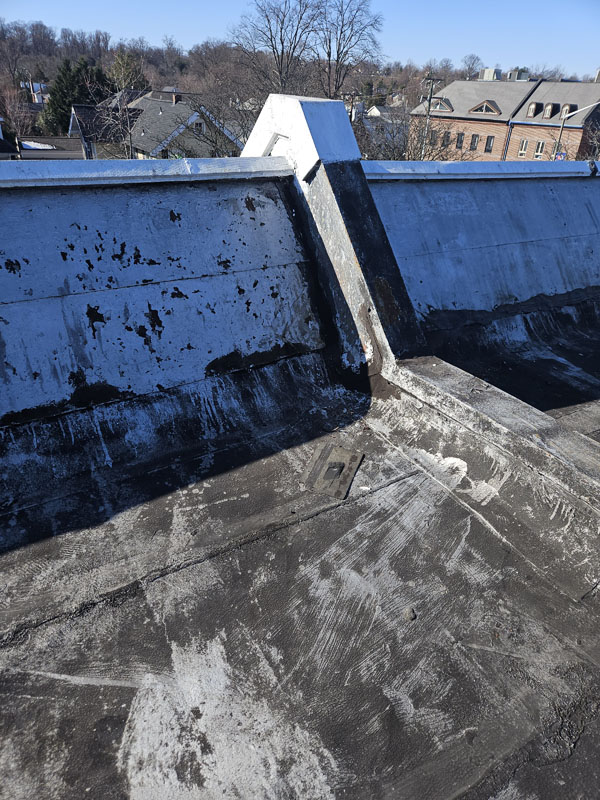
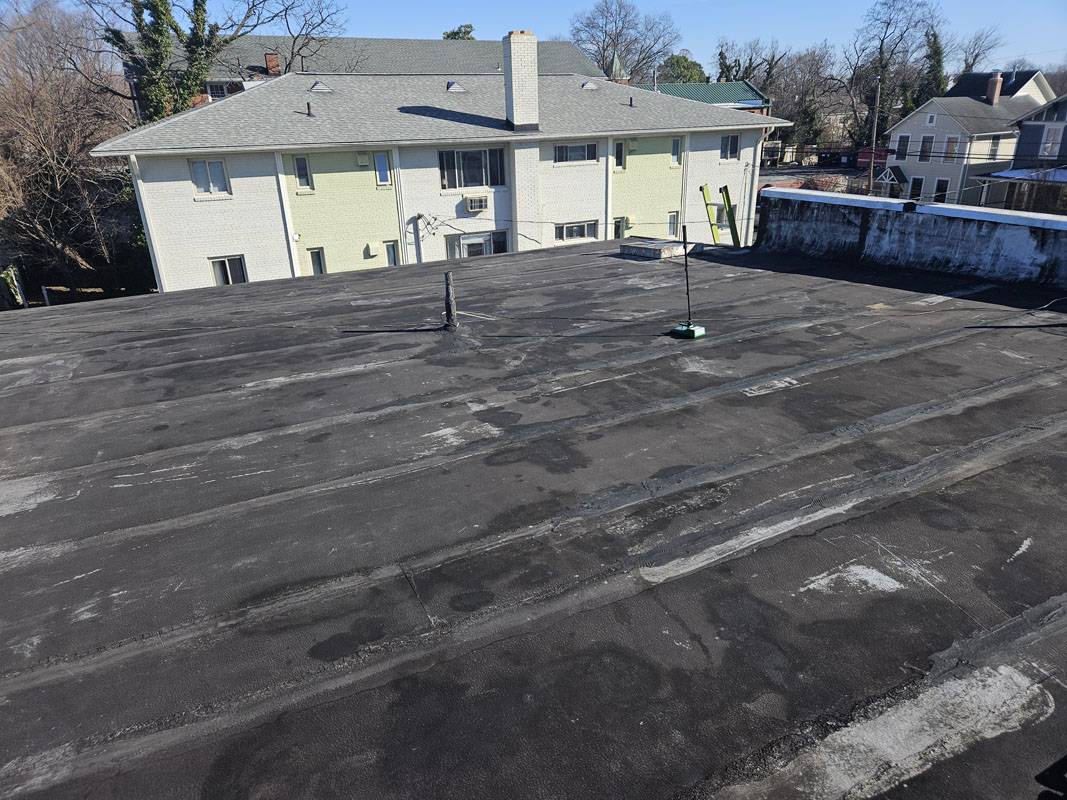
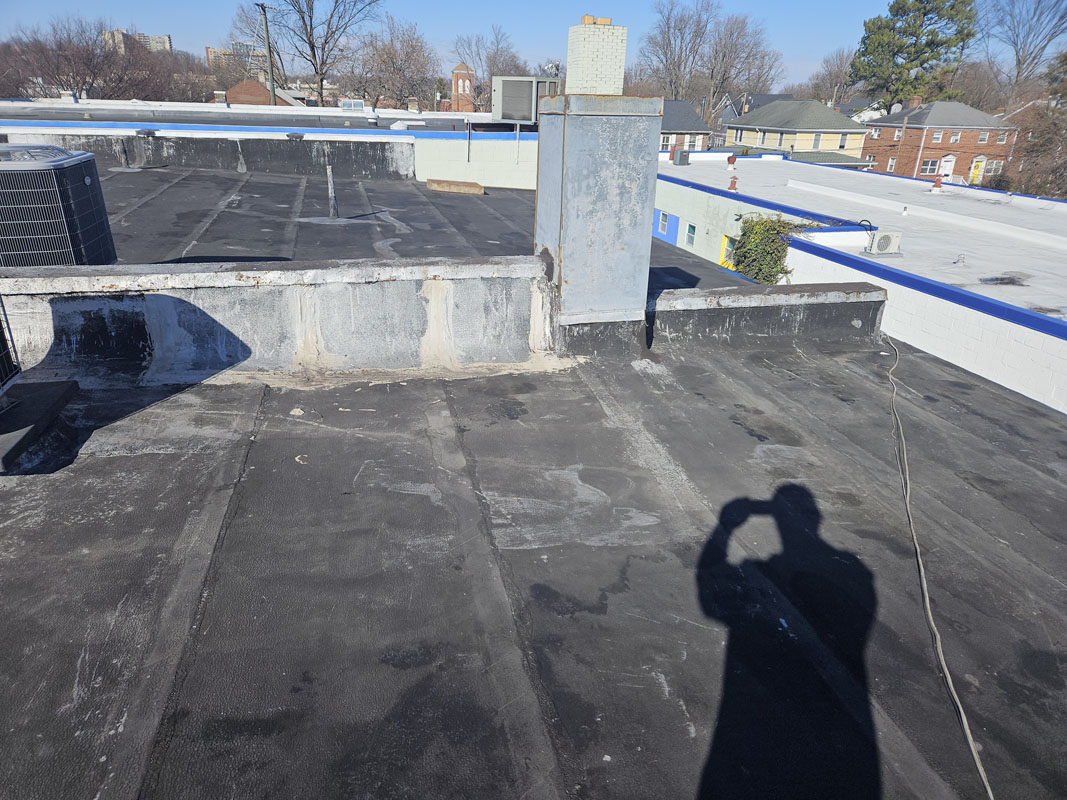
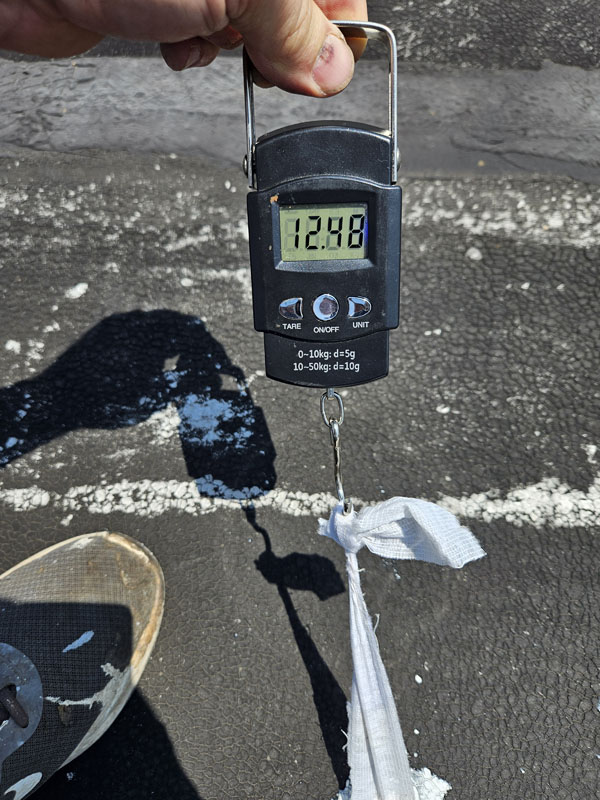
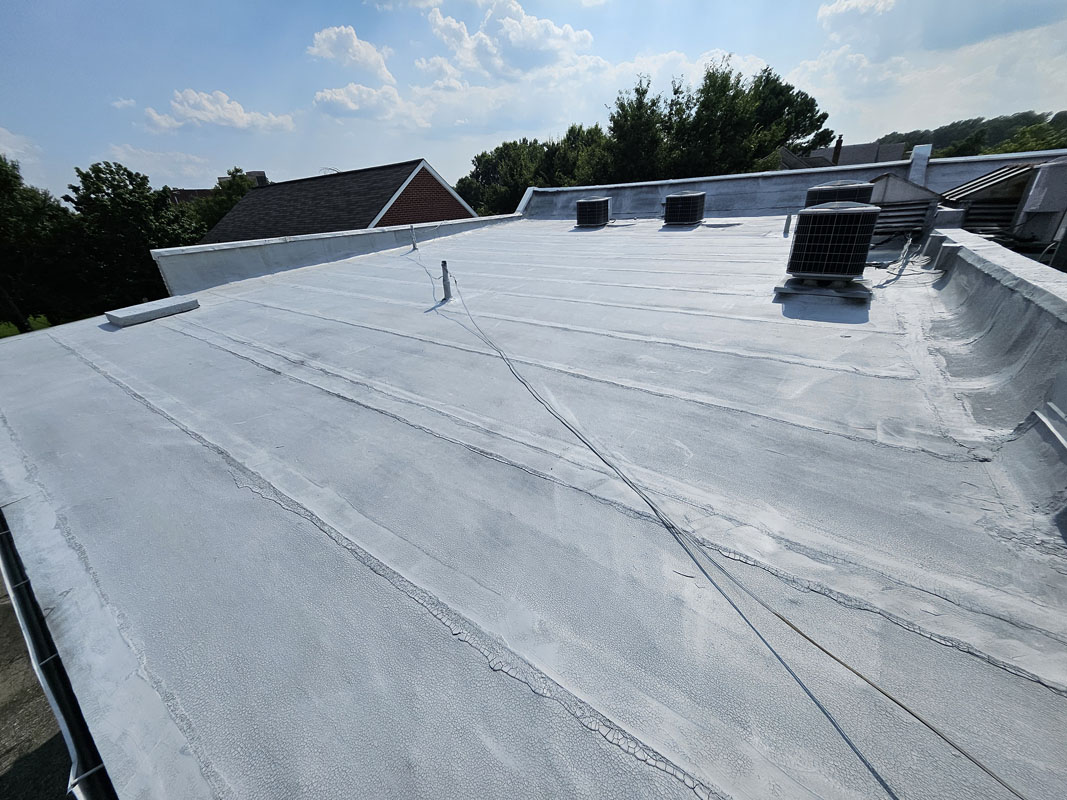
Original project photographs taken by GoTech Roofing at 2105 Mt Vernon Avenue, in sequence: the weathered modified bitumen surface as found, the power wash that prepared it, the adhesion and moisture testing that had to pass before any coating was committed, the bleed-block primer that keeps asphalt from yellowing a white roof, and the finished silicone system.
Who Did the Work
Project Team & Credentials
Site Supervision
All field crew members assigned to the project had completed OSHA 30-Hour Construction Safety training, with a designated Fall Protection Competent Person on site for the duration of the work.
Manufacturer Certification
GoTech Roofing held current manufacturer-certified applicator status at the time of the work, a condition of the Progressive Materials 20-year warranted system being issued on the completed roof.
Inspection & Reporting
GoTech Roofing commercial roof inspection staff documented the pre-restoration conditions, the Tramex moisture survey, the post-sunset HIKMICRO infrared thermographic scan, the core samples, the adhesion test, the repair and seam-striping scope, and the film thickness achieved. Progressive Materials performed the final inspection and warranty closeout.
Common Questions
Silicone Roof Restoration FAQ
These are the questions building owners and property managers most often ask when an aged modified bitumen or built-up roof is leaking but has not necessarily failed. Each answer explains the general principle so you can evaluate your own building's roof. More detail on our process is on the roof coatings page.
Can a modified bitumen roof be restored with a silicone coating instead of replaced?
Yes, when the assembly below the membrane is dry and structurally sound. Modified bitumen is one of the substrates silicone restoration is best suited to, because the existing membrane stays in place and becomes the base sheet for a new fluid-applied waterproofing layer. What determines eligibility is not the age of the roof but its condition: a moisture survey has to confirm the insulation is dry, any wet areas have to be cut out and replaced, and an adhesion test has to confirm the coating will bond to that specific weathered surface. If the survey shows widespread saturation or the deck below has failed, restoration is the wrong answer and the roof needs replacement.
Does a roof with two or more existing layers have to be torn off?
Yes, and because the restriction appears in both model codes, the correct citation depends on what kind of building it is. For one- and two-family dwellings and townhouses, the residential provision is 2018 IRC Section R908.3, which governs roof replacement and does not permit a roof recover where the existing roof already has two or more applications of any type of roof covering. For commercial buildings and most multi-family residential construction, the equivalent commercial provision is 2018 IBC Section 1511.3. The effect is the same under either code: where a roof already carries two or more layers, for example modified bitumen installed over an existing built-up roof, a new roof covering cannot legally be installed over the top, and the existing layers have to be removed down to the deck first. That turns a traditional re-roof into a mandatory full tear-off, which is the most expensive and most disruptive part of any roofing project: it is noisy and dirty, it exposes the interior to weather, and on an occupied building it is the part residents notice most. A silicone restoration is not a new roof covering installation, so the two-layer restriction does not force a tear-off. The existing layers stay on the building and are waterproofed with a fluid-applied coating instead. This project is a multi-family apartment building, so the IBC provision is the one that applies.
What is a silicone roof restoration?
A silicone roof restoration is a fluid-applied waterproofing system installed over an existing low-slope roof rather than replacing it. The roof is power washed, repaired, and detailed, every membrane lap seam is reinforced with a silicone seam stripe, failed seams and flashings are rebuilt with reinforced three-course repairs, and a high-solids silicone field coating is then sprayed or rolled over the entire roof to a specified dry film thickness. The result is a seamless, highly reflective membrane that is renewable at the end of its warranty term rather than being torn off and landfilled.
Why does a modified bitumen roof need a bleed-block primer before silicone coating?
To keep the asphalt from discoloring the coating. Chemicals bleed out of an asphalt roof surface and migrate up into the silicone above it, turning a white coating yellow. Progressive Materials P-160 Asphalt Bleed-Block Primer is a single-component, water-based, plasticizer-free acrylic primer designed for smooth asphalt roof surfaces, and it forms a barrier between the asphalt and the silicone that stops that bleed-through. On a Progressive Materials modified bitumen system it is applied over the entire asphalt surface at one gallon per 100 square feet before any silicone goes on. It can be sprayed, brushed, or rolled, and spray application is preferred.
What is a silicone seam stripe and why is it applied before the field coating?
A seam stripe is a heavier band of silicone applied over every membrane lap seam before the field coating goes down. On a Progressive Materials system it is applied at 20 mils and roughly two inches wide, at a coverage rate of about 400 linear feet per gallon. Laps are where a modified bitumen roof moves and where water finds its way in first, so building extra thickness there before the field coat means the most vulnerable line on the roof carries more material than the field, not less. Skipping the stripe leaves the seams at field thickness and is one of the most common reasons a coating fails early.
What is a three-course repair on a roof?
A three-course repair is a reinforced detail built in three passes: a base layer of silicone, a layer of polyester reinforcing fabric embedded into it while wet, and a second layer of silicone over the top that fully encapsulates the fabric. The fabric gives the repair tensile strength and bridging ability that coating alone does not have, which is why it is specified at failed or open seams, at flashing failures, and at penetrations and curbs. Any area that has already moved or split is repaired this way rather than simply being coated over.
How thick does a silicone roof coating have to be for a 20-year warranty?
For a Progressive Materials 20-year system over modified bitumen the field coating must achieve a minimum of 40 mils dry film thickness, and the 20-year color option is white only. Thickness is what drives warranty term on a silicone restoration: shorter warranty terms are written at lower dry film thicknesses and longer terms require more material on the roof. Because the requirement is a dry film thickness, application has to be logged and verified as the work proceeds, and the manufacturer inspects the completed roof before the warranty is issued.
Why is a moisture survey required before a roof restoration?
Because a coating is a vapor-retarding layer, and any water already trapped in the assembly stays trapped underneath it. Wet insulation loses its R-value, corrodes a metal deck, and will push against the new coating as it tries to escape, which can blister or disbond the system. A non-destructive moisture survey maps where the assembly is wet so those areas can be cut out and replaced before any coating is applied. It is also a manufacturer requirement, not just good practice, on a warranted restoration system.
What is an adhesion test and why is it done before coating a roof?
An adhesion test confirms that the coating will actually bond to the specific roof it is being applied to. A small area is cleaned and dried exactly as the full roof will be, a sample of the coating is applied, and once cured it is checked for bond. Aged roof surfaces vary enormously depending on the original product, how weathered they are, and what has been applied over them previously, so the test is performed on the actual roof after cleaning rather than assumed from the data sheet. It is required after cleaning and drying and before the field coating is committed to.
Can ponding water be corrected without tearing off the roof?
Yes. Low areas that hold water can be built back up with a pourable or trowel-applied slope compound such as Progressive Materials Pro Slope, which is installed in the low spots and feathered out into the surrounding field so water is carried to the drains instead of standing. Heavily alligatored or cracked areas are filled and smoothed with a surface leveler such as PM SL 800 for the same reason: the silicone needs a sound, continuous surface to bond to. Correcting the slope during the restoration matters because silicone tolerates ponding far better than most coatings, but standing water still shortens the life of any roof and works against the warranty.
How do you coat the roof underneath rooftop HVAC units?
The units are lifted. Rooftop equipment sitting close to the deck leaves a strip of roof that cannot be cleaned, detailed, or coated, and that strip is often the oldest and most neglected part of the roof. Each unit is disconnected as required, jacked and supported clear of the roof surface, and the area beneath it is washed, repaired, seam striped, and coated to the same specification as the open field before the unit is set back down. Leaving those areas uncoated would create an unwarranted gap in the middle of a warranted system.
How is roof work managed over an occupied apartment building?
Restoration is well suited to occupied residential buildings because there is no tear-off: the existing membrane is never opened, so there is no point at which the interior is exposed to weather and no tear-off debris to move through or around the building. Work is scheduled during normal daytime hours, residents are notified in advance of work over their units and of any temporary interruption to rooftop equipment, staging and ground protection are set outside resident entrances and parking, and equipment that serves individual apartments is coordinated so nobody loses conditioning.
What does a 20-year Progressive Materials silicone warranty cover?
The 20-year Progressive Materials system carries a 20-year labor and material warranty covering leaks caused by failure of the silicone material, subject to the warranty terms and exclusions. It requires the system to be installed to the published specification, including the minimum 40 mil dry film thickness, white coating, seam striping, and reinforced repairs at failed seams and flashings, and it requires a manufacturer inspection of the completed roof before the warranty is issued. That final inspection is the step that converts a completed coating job into a warranted roof system.
Keep Looking